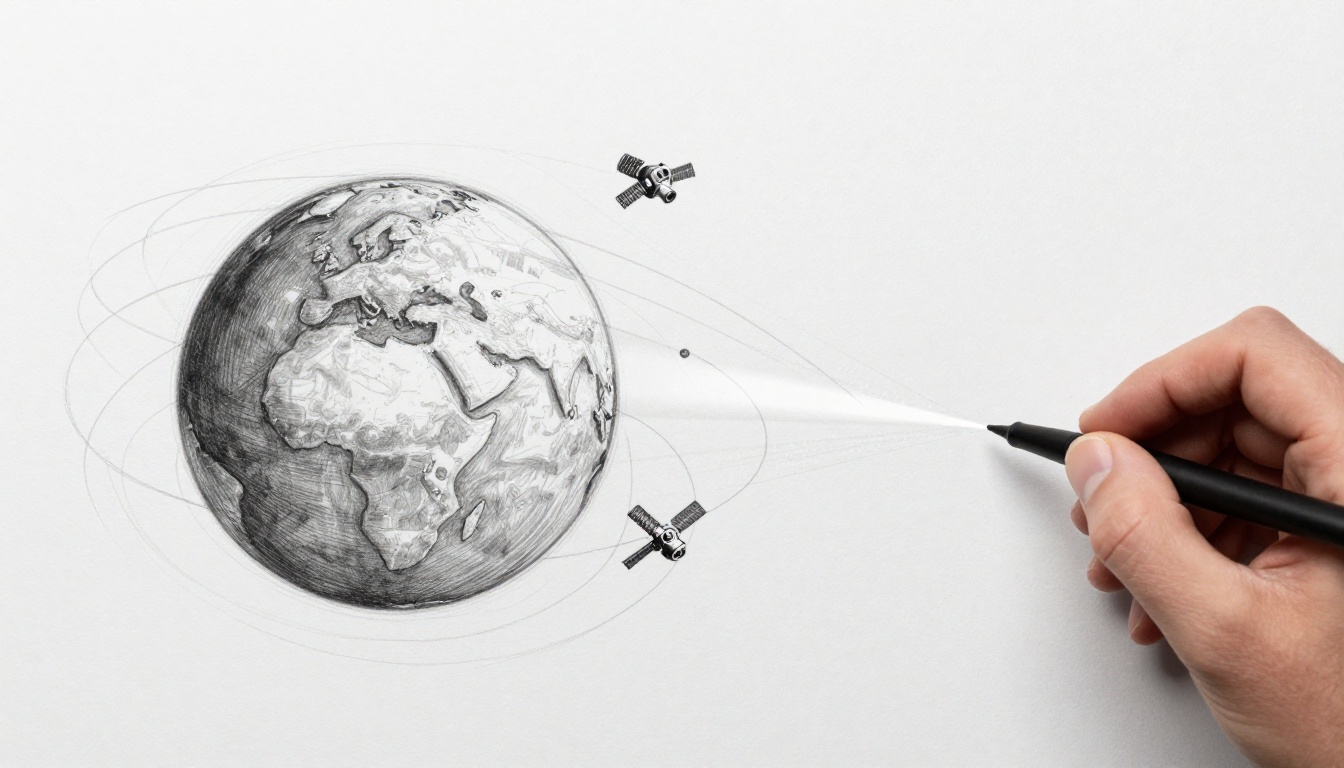
A space mission can feel like it’s stuck in slow motion. Even today, messages to Mars can take minutes to arrive, one way. That delay makes every command feel like a careful bet.
Meanwhile, the next wave of missions needs more than “good enough” links. You’ll want faster data for science, steadier connections for crews, and stronger security against interference. That’s why people are watching space communication tech like hawks in March 2026.
Right now, big shifts are coming from laser communications, quantum security ideas, growing satellite swarms, and more AI on spacecraft. In the sections ahead, you’ll see what holds space links back today, which new technologies are gaining ground, and what NASA, ESA, and SpaceX are planning. By the 2030s, space communication will be faster, safer, and smarter, opening doors to Moon bases and Mars colonies.
Why Current Space Communication Feels Stuck in the Past
Space links still rely on radio waves that were designed for a different era of missions. Radio works, but it hits limits fast. Bandwidth stays tight, and every extra bit of data takes time and power.
At the same time, distance creates a hard ceiling. You can’t “download faster” if physics adds delay. So, deep missions often rely on careful planning and slow, ground-led steps instead of real-time control.
Finally, security is getting tougher. When more nations and companies use space networks, more threats show up. Jamming, spoofing, and cyber attacks all push mission teams to improve how they authenticate signals and protect data.
As a result, evolution is urgent for Artemis, science fleets, and any long trip beyond Earth.
Bandwidth Bottlenecks Slowing Down Data Downloads
Think of space comms like trying to send a video over a garden hose, while Earth fiber is a firehose. Radio systems can carry data, but the data rate drops sharply with range and interference. This becomes obvious when you wait for high-resolution images or rover videos.
For example, a rover might capture thousands of frames in a day. Yet the mission may only return a small slice at first. Later, it fills the rest as the link improves and schedules open up.
In addition, bandwidth limits force trade-offs on spacecraft design. Teams must choose between sending raw sensor data or compressing it onboard. That’s why onboard processing matters, even if it does not feel “exciting” like a new rocket.
A big theme for the future is this: spacecraft will do more work in orbit. They’ll filter, compress, and prioritize data before it ever reaches Earth.
Latency Delays That Make Missions Tricky
Latency is the other wall you can’t move. For Mars, the one-way light time ranges from about 4 to 24 minutes depending on where Earth and Mars line up. That means round trips can stretch to an hour or more.
So, you can’t treat a rover like a remote-control toy. You also can’t run live video calls the way you do on Earth. Instead, missions plan sequences ahead of time. They also build in autonomy, so spacecraft can react when commands arrive too late.
Meanwhile, there’s hope in low-Earth orbit. Near Earth, delays shrink a lot. As a result, new networks and smarter terminals can support faster interactions for many users. Still, deep space remains its own category, with delay baked in.
Here’s a useful mental picture: it’s like waiting for a reply from someone who’s far across a long ocean. You can’t rush them, so you ask better questions and plan more carefully.
Security Risks from Jamming and Cyber Attacks
Space links don’t exist in a quiet vacuum. They’re radio signals in open space, and that makes them targets. In real conflicts on Earth, GPS jamming has shown how easily navigation signals can be disrupted.
Cyber risks also grow as missions connect more systems. A spacecraft can include customer data, mission telemetry, and command links. If attackers find a weak point, they might disrupt services or try to spoof signals.
This is why future space communication needs security built into both the signal and the software. Missions will authenticate who sent a message, and they’ll protect data during transfer.
Quantum ideas enter the picture here, because they promise ways to detect interception. Even if the full vision takes time, the security push is already moving.
The next era of space comms won’t be judged only by speed. It will be judged by trust.
Laser Beams and Quantum Tech Set to Supercharge Links
Radio will not vanish overnight. Still, optical and quantum methods can push space communication into a new performance tier.
Lasers can send signals with much narrower beams. That makes interference harder and allows higher data rates. Quantum security, meanwhile, aims to make interception detectable, so teams can react sooner.
Together, these technologies target two big problems at once: speed and safety.
How Laser Communications Slash Delays and Boost Speeds
Laser communications (often called optical comms) can pack more data into the link. Because a laser beam is focused, it can deliver more information without spreading as widely as radio.
That matters for deep space, where you need both data and power efficiency. Higher-rate links mean missions can return more science per contact window. They also reduce how long you wait between updates.
NASA and ESA are also pushing lunar relays to improve data flow near the Moon. For context on the upcoming Lunar Pathfinder effort, see Lunar Pathfinder – ESA BSGN. The project focuses on a dedicated lunar communications relay spacecraft planned for 2026.
As relay options improve, missions won’t have to “go silent” for so long. They can schedule higher-value downlinks with more confidence. Over time, that turns comms from a bottleneck into a planning advantage.
Quantum Networks for Unbreakable Security
Quantum communications get discussed a lot, but the core idea is simpler than it sounds. Quantum key distribution (QKD) uses quantum properties so eavesdropping changes the signals. That gives the network a way to spot intrusion.
IonQ is one company advancing QKD work, and its progress helps show the hardware can run outside lab conditions. For example, IonQ has reported major operational QKD deployments in Europe, covered in IonQ’s announcement about large operational QKD networks. While that specific news focuses on terrestrial networks, it shows the tech maturing in real infrastructure.
At the same time, the future goal is cross-domain security. The vision includes secure links between satellites and between space and ground.
Even if quantum does not replace everything soon, it can shift expectations. Missions may demand strong interception detection as a baseline. That will raise security across the whole stack, not just in one link type.
Satellite Mega-Constellations and AI Making Comms Smarter
Not all progress comes from new physics. Some comes from math, code, and more satellites in the right places.
In the near term, low-Earth orbit (LEO) networks help by cutting distance to users. More satellites also mean more routing options. That can reduce outages and smooth data flow.
Then AI steps in. It can prioritize what matters, detect link problems, and even help spacecraft plan.
In March 2026, SpaceX also kept growing Starlink. It launched 83 satellites in the month so far, and the constellation topped 6,700 satellites, improving service for remote areas and users on planes and ships.
Starlink and Swarms Bringing Internet Everywhere
LEO offers shorter paths, which helps with delay. It also enables more flexible network routing. For many people, that means better service where fiber lines don’t reach.
One reason Starlink got so much attention is its scale. More satellites means more chances to connect, and that reduces dropouts. Plus, inter-satellite links can help route data without waiting for a specific ground station.
If you want a deeper look at how Starlink’s orbital setup affects performance, check Starlink lowers satellite orbit distance. That kind of change influences coverage patterns and link quality over time.
Beyond internet, these swarms also support space mission needs. They can act as a bridge for non-critical traffic, like early alerts, engineering telemetry, or data that can wait. As a result, deep missions can reserve expensive downlink time for science.
LEO networks are also pushing into non-terrestrial communications. Real-time data from 3GPP-based direct-to-device efforts shows how phone and IoT use cases can expand in coming years.
AI Taking Over to Handle Tough Space Challenges
AI is not just for apps. In space communication, it can reduce workload on ground teams.
For example, AI can flag problems fast. If a link drops, it can predict likely causes and adjust schedules. It can also help with error correction and data prioritization.
On the spacecraft side, AI can run in low power. That’s important because you can’t power a data center in orbit. Instead, the system uses smart models to process sensor streams and decide what to send.
Meanwhile, software-defined radios (SDRs) let teams update communication settings more easily. Combine SDRs with AI, and you get a flexible system that can change how it transmits based on current conditions.
NASA and others also keep upgrading network tools for upcoming Artemis connectivity. NASA’s Jet Propulsion Laboratory describes how mission networks support Artemis II in Networks Keeping NASA’s Artemis II Mission Connected. That includes the kind of operational focus that keeps links reliable during launch and early mission phases.
The payoff is simple: fewer surprises, faster recovery from faults, and less waiting around for ground teams.
The 2030s Roadmap: Moon Relays, Mars Gateways, and Beyond
The 2030s will not be about one magic fix. It will be about connected upgrades that work together.
Start with the Moon. Relays near lunar space can reduce how often missions must depend on Earth for every hop. Then carry that idea outward. If you can route data through the right nodes, you can build a network that feels closer than it really is.
Next, expect more automation. AI-driven scheduling and onboard processing will help missions handle uncertainty. You’ll still plan carefully, but you won’t rely on a human command loop for everything.
Finally, expect mixed technology. Laser links might handle high-rate bursts. Quantum methods might protect sensitive transfers. LEO networks can carry lower-priority traffic and keep services alive near Earth.
NASA and ESA’s Push for Lunar and Deep Space Nets
Artemis is the headline mission, but the comms backbone matters just as much. NASA’s network plans for Artemis II include more than antennas. They include how systems talk, how data moves, and how links stay stable under real conditions.
For the Moon relay side, Lunar Pathfinder is a strong example of how organizations plan for sustained lunar connectivity. The UK government’s case study explains that Lunar Pathfinder will be a dedicated lunar communications relay spacecraft, with a launch planned for 2026: see Lunar Pathfinder – Case study – GOV.UK.
This fits the bigger pattern: missions will need relay support that can handle more data per day. Also, relay nodes can create new timing windows for downlinks.
As those nodes mature, deeper missions can piggyback on them. The Moon becomes less of an end point, more like a relay hub.
SpaceX’s Role in Global and Deep Space Comms
SpaceX’s big contribution is building a large, living network. Starlink’s growth affects more than consumer internet. It also changes the baseline for space communication hardware, routing, and operational experience.
In the 2030s, that experience will likely help with mission communications. Reusable launch and rapid iteration can shrink timelines for updates. It also means more satellites get tested in real conditions.
Starlink’s constellation scale also helps with coverage and service resilience. That’s useful for emergency response and remote operations on Earth. It can also support mission teams when they need backup paths for data.
In addition, satellite networks are increasingly linked to non-terrestrial standards. Direct-to-device and IoT support can improve how spacecraft and ground teams exchange data during early phases.
If you’re watching the future of space communication, here’s the key point: the network won’t be one system. It will be many systems that share capacity and timing.
Conclusion: A Faster, Safer Comms System Is Coming
Space communication will evolve because the old approach runs into hard limits. Radio bandwidth caps data rates. Distance adds unavoidable delay. Security threats keep growing as space use expands.
The future points to a stronger mix. Laser links can boost speed and reduce interference. Quantum security aims to detect interception. And AI with satellite swarms can help spacecraft prioritize data and recover from link issues faster.
That’s the path that leads to the Moon and beyond. By the 2030s, space communication will be faster, safer, and smarter, opening doors to Moon bases and Mars colonies.
Want to stay ahead of the curve? Follow NASA and ESA updates, then watch how LEO networks keep expanding through the year. What do you think will matter most to you, speed, reliability, or security?