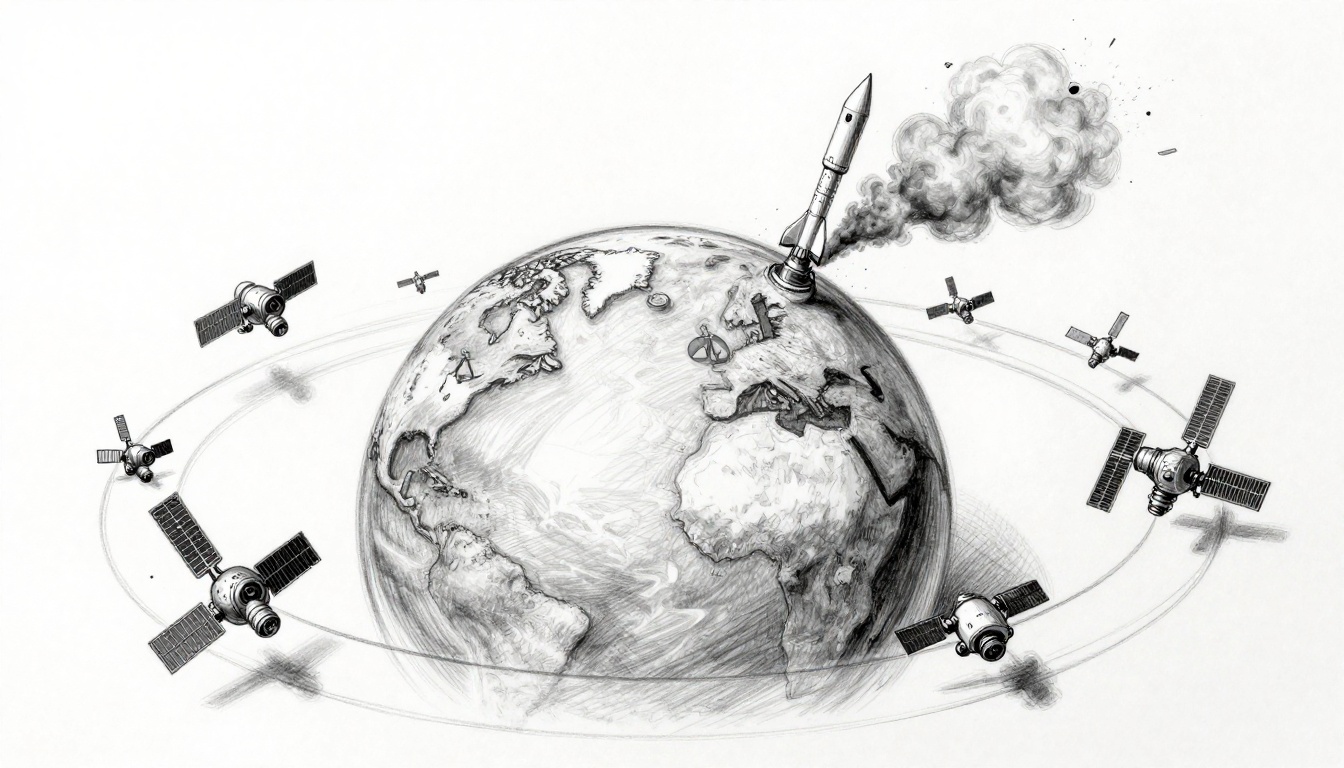
Starlink and other mega-constellations make it feel like internet everywhere is only months away. Yet the sky has its own physics, politics, and limits.
By late March 2026, there are about 9,400 active Starlink satellites in low Earth orbit, and total operational LEO satellites sit around 14,000 to 15,000. Plans also point to tens of thousands more as networks like Starlink, Kuiper, and OneWeb push ahead. In the excitement, it’s easy to miss the real friction points companies face right now.
So what makes expansion so hard in 2026? It’s not just launching satellites. It’s avoiding interference, handling orbital congestion, meeting regulatory rules, managing cost pressures, reducing environmental impact, and dealing with security risks in a tense world.
You’ll see how each challenge shows up in day-to-day operations, plus the fixes that help, and the limits that still remain.
Orbital Crowding and the Risk of Space Crashes
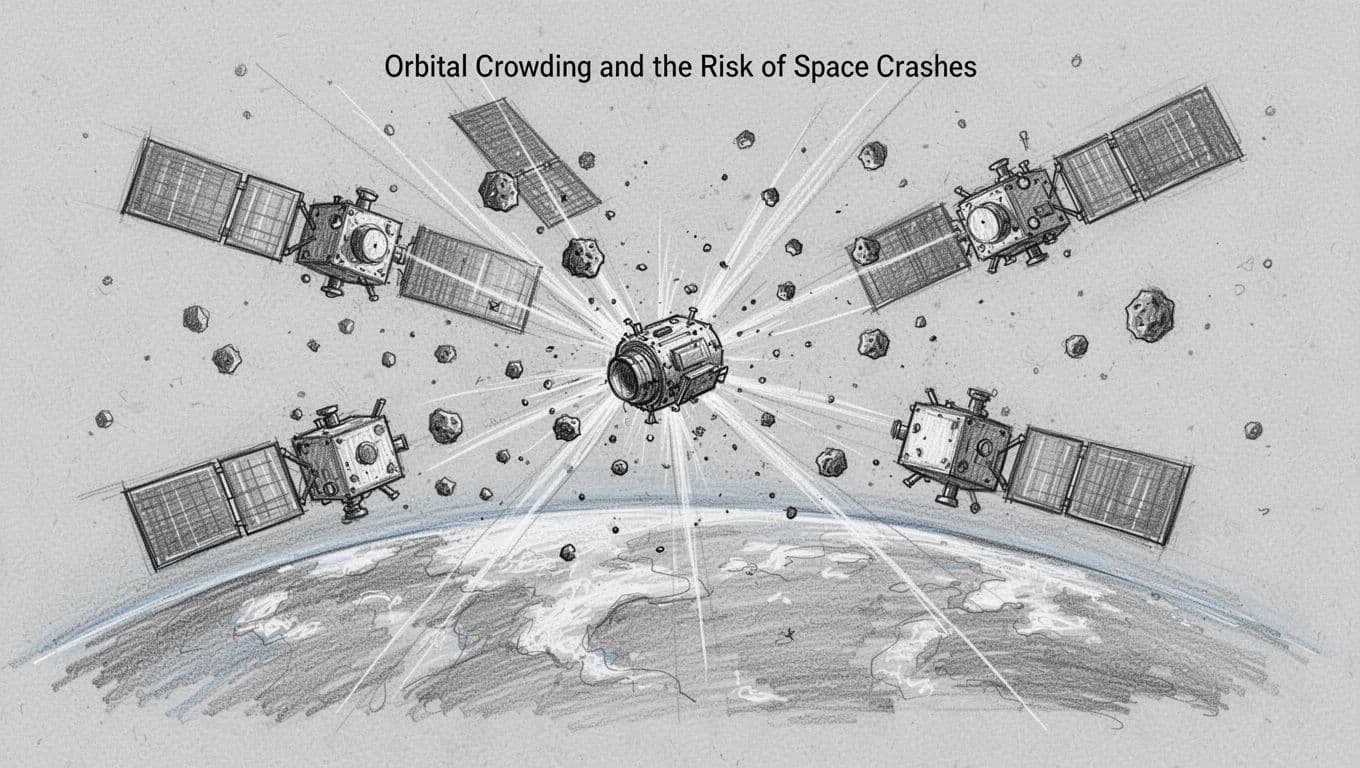
When thousands of satellites share low Earth orbit, it starts to feel like a freeway at rush hour. There’s not enough “extra space” for everyone to ignore mistakes.
Low Earth orbit is already crowded. Around 55% of all operational satellites sit below 2,000 km altitude, and that’s the band where most broadband constellations operate. Even if objects are tracked well, higher numbers mean more chances for near misses. Debris risk is also real: tracking systems counted about 33,630 objects as of March 29, and those include fragments, defunct satellites, and mission-related pieces.
Crowding forces operators into constant math. They must predict orbits, plan collision avoidance maneuvers, and coordinate deorbit plans. In practice, that means companies spend time and propellant on safety instead of revenue. It also means satellites sometimes “swerve” to avoid other objects, which can reduce performance for users.
A major concern is that debris multiplies. If a collision creates fragments, the next years get harder. For a clear overview of why momentum matters, see Too many satellites? Earth’s orbit is on track for a catastrophe.
Operators also have to plan for disposal. Starlink, for example, has signaled orbit-lowering for many spacecraft in 2026, which can speed up natural reentry and lower long-term risk. It’s a practical step, but it can’t erase congestion overnight.
There’s some good news on the technical side. Newer satellite generations aim to improve coordination. Starlink V3 satellites are built with laser inter-satellite links, which help satellites route data through the network more efficiently. In an expanded constellation, better routing matters because it reduces the strain on ground gateways. However, laser links do not remove physical collision risk. They help the network stay useful, even when operators must run collision avoidance and capacity balancing.
Signal Interference That Slows Down Service
Satellite internet relies on radio spectrum. That sounds simple until you remember that radios compete for attention.
Many broadband constellations use Ku-band or Ka-band links. If satellites transmit on frequencies that overlap too closely, receivers can hear unwanted energy. That can cause “jams” and reduce usable signal strength. Even without a direct collision, interference can feel like a crash to the user, because throughput drops and latency rises.
Expansion makes this more complex. When you add more satellites, you increase the odds that two systems will create harmful overlap in the same place and time. In crowded areas, the effects can show up during peak use, because many users share limited capacity.
Interference also interacts with the user terminal side. In the real world, phones and antennas are not perfect. A small pointing error or a noisy local environment can turn “barely enough” into “not enough.” That’s why network operators constantly tune power levels, beam patterns, and scheduling.
Another layer comes from direct-to-device plans. When satellites send service to phones, they must coexist with terrestrial mobile networks that also use radio bands. In the US and Europe, regulators and operators push for guard bands, power limits, and technical rules to reduce interference. Still, these systems are still learning how to live side by side, especially as more satellites enter service.
There’s also a coordination issue across constellations. When two networks expand at the same time, their coverage patterns can overlap. Operators may adjust parameters, but they cannot fully control where users point antennas or how buildings reflect signals. So interference risk doesn’t disappear. It shifts.
The bottom line: orbital growth creates RF crowding too. More satellites can mean more capacity, but it also raises the workload for interference management, especially in busy regions.
Throughput Limits in a Packed Sky
Adding satellites usually increases raw capacity. Yet users often experience slower speeds for another reason: bottlenecks.
A constellation needs ground gateways to connect space to the internet backbone. Those gateways are limited by geography, fiber availability, licensing, and throughput constraints. If too many user beams funnel through too few gateway links, service slows, even if there are satellites overhead.
User terminals matter too. Antennas have a max data rate. Weather affects signal quality, especially in Ka-band. Also, the network schedules traffic. During peak hours, scheduling decisions can create uneven performance, with some users getting stronger links than others.
This is where newer tech helps. Starlink V3 satellites, launching in the first half of 2026, bring much higher capacity improvements and inter-satellite routing. The point of those upgrades is simple: shift more data through the constellation without relying as heavily on direct gateway paths. Starship-related deployment capacity also supports faster rollout of upgraded satellites and more capable network configurations.
Still, expansion can run into a “capacity illusion.” You might think that more satellites automatically equals more user speed. Instead, users feel improvements only when the whole system grows together, including terminals, gateways, backhaul, and routing software.
Market pressure adds another twist. A “post-capacity” environment changes what matters. As bandwidth becomes more common, companies win by reliability and consistency, not by raw counts. Novaspace’s March 12, 2026 analysis points to a shift where abundance of capacity is no longer the main differentiator, and operational performance becomes the deciding factor. See Satellite Connectivity in a Post Capacity Era.
So the challenge isn’t just launching more satellites. It’s making sure the network can feed data where users actually are, at the moments they need it most.
Global Rules That Block Quick Growth
You can’t expand a satellite network like you expand an app. Rules change by country, and spectrum rules are not one-size-fits-all.
Spectrum is the key resource. Each region has its own processes for licensing frequency usage, setting technical limits, and approving service. If your planned bands overlap with other services in one country, you might need different power levels, different beam rules, or different timing. That slows deployment and adds engineering cost.
Then there are orbital permissions. Operators need approval for orbital slots, orbital planes, and operational constraints. Even when regulations look similar, approval timelines can vary widely. Some regions move quickly. Others take longer, especially when they want proof that interference risk stays low.
Ground stations also face hurdles. Local approvals can be needed for siting equipment, power limits, and radio emissions. Meanwhile, fiber backhaul and landing station rights can become the true schedule driver. Satellites may be ready, but the internet path on Earth might not be.
In Europe, regulators often require strong coordination to protect legacy services. In the US, the FCC also has to balance new entrants against incumbent satellite and telecom providers. That creates ongoing disputes over “how much power” and “what kind of sharing” should be allowed across bands.
A recent example of how contentious spectrum sharing can get is the clash over FCC spectrum sharing rules and power limits, including Equivalent Power Flux Density (EPFD) standards. For context, see FCC spectrum sharing rules and power limits.
So the growth bottleneck isn’t always in the factory or on the launch pad. Often it’s in approvals, coordination, and the back-and-forth needed to satisfy both technical standards and political concerns. When that happens, timelines slip, and the “internet everywhere” promise takes longer than marketing implies.
Sky-High Costs and Price Wars Heating Up
Satellite networks live in two cost worlds at once: the cost to get to orbit, and the cost to keep service running.
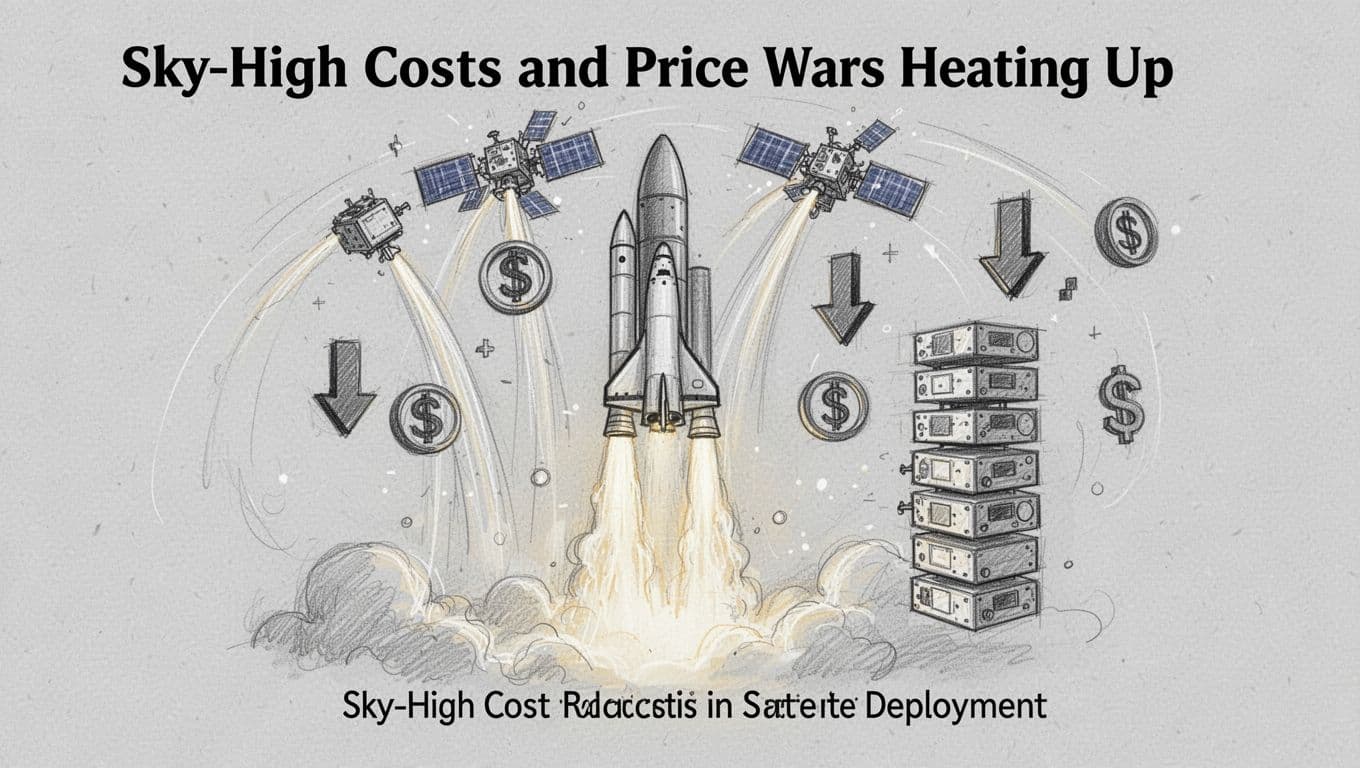
Launch cost has improved over time, largely because reusable rockets brought prices down. Starship also gets attention in 2026 because it can carry large payloads and potentially reduce cost per unit capacity. However, costs vary by provider, and not everyone gets the same launch rates or schedule flexibility.
Even when the launch gets cheaper, manufacturing can become the next bottleneck. Satellites need electronics, antennas, power systems, and software qualification. As companies scale, they must keep quality high while reducing unit cost. That’s hard when production ramps faster than test capacity.
Then there’s the “distribution of costs” problem. A constellation isn’t just one satellite. It’s thousands, plus replacement units, plus ongoing operations. Operators must budget for disposal maneuvers, monitoring, and software updates for network control.
This is where competition changes the game. As more constellations offer service, the market can move toward price pressure. Kuiper and OneWeb have created more competitive pressure, even if they enter service phases on different timelines. When customer pricing drops, operators still need margins to fund launches and upgrades.
Novaspace’s March 12, 2026 report also fits this story. In a post-capacity era, “more bandwidth” alone doesn’t win. Customers notice when speeds are stable and latency doesn’t swing. That means companies spend money on network optimization, customer support, and reliability engineering, not just new satellite deployment.
The bottom line is blunt: expansion costs don’t scale linearly down. Even with cheaper launches, the hard parts move. Production, operations, and competition all keep spending alive.
Environmental Downsides of Satellite Swarms
It’s easy to focus on connectivity. Still, satellite expansion creates environmental problems on two fronts: space debris and the night sky itself.
First, debris. Every launch adds risk. Even “good” satellites can break due to component failures. If many satellites malfunction over time, the debris environment worsens. Regulators push for deorbit plans and stricter end-of-life rules, because that’s the only way to keep long-term risk from ballooning.
Second, light pollution. Astronomers and stargazers report that satellite trains can create streaks in images. That can harm research quality, especially for long-exposure observations. Even if satellites are dimmed and darkened, sheer numbers make the sky busy.
There’s an active debate about how bad it gets, and whether mitigation steps are enough. Scientific American has covered concerns that runaway mega-constellation growth could ruin parts of the night sky. See mega-constellations could ruin the night sky.
In 2026, companies are trying more mitigation steps. Some spacecraft have better thermal and reflective control. Others change operational patterns to reduce brightness during observation windows. Meanwhile, deorbit plans aim to move satellites out of key orbits quickly.
Yet there’s a scale problem. You can improve one satellite’s brightness or one satellite’s end-of-life plan. Scaling to tens of thousands means you must improve across fleets, not just prototypes.
That’s why environmental downsides are not a one-time hurdle. They’re an ongoing cost center and a compliance requirement. Expansion keeps pressure on the same fixes, and fixes must keep improving.
Geopolitical Risks in a Connected World
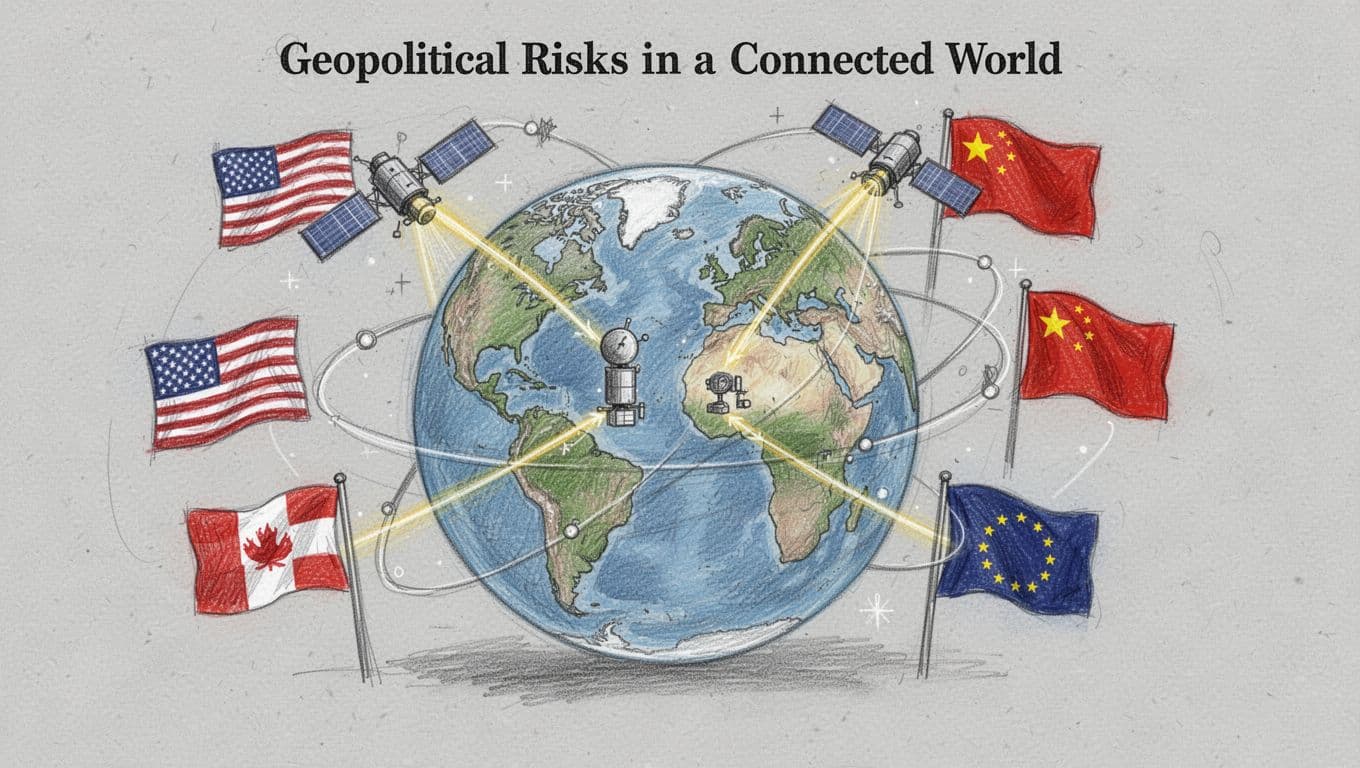
Satellite networks don’t just connect people. They connect supply chains, emergency response, research, and military logistics. That makes them a geopolitical target.
In tense periods, countries push for secure and sovereign communication links. They want control over routing, equipment, and data handling. That can shape procurement decisions and influence which providers get access to government contracts.
At the same time, higher reliance creates cyber risk. If more critical services run through satellites, attackers have more ways to disrupt them. That includes jamming attempts, spoofing risks, and attempts to compromise ground segment systems. Ground stations and network control software become high-value targets.
Encryption and authentication help, but they can’t remove every threat. Operators also need strong incident response plans, patch management, and secure supply chains. Each extra dependency adds complexity.
Geopolitics also affects regulations and rollout speed. Some regions move more slowly because of security review. Others might allow service but demand local controls. Europe, in particular, has faced debate over timing and rules for spectrum sharing, licensing, and interference protection.
SatShow 2026 coverage highlights how space sovereignty and security concerns are reshaping planning. For a sense of the themes showing up at major industry events, see SatShow 2026 trends shaking up satellite.
So expansion isn’t just a technical race. It’s also a trust race. Governments, carriers, and defense groups want assurance that systems won’t become leverage against them.
The real challenge is balancing open connectivity with control and safety. As fleets grow, so does the need for strong governance.
Conclusion: Expansion Means More Than Launches
The dream of internet everywhere is real, but expansion comes with a stack of hard constraints. Orbital crowding raises collision and debris risk, while radio interference can limit speeds even with many satellites overhead. On top of that, global rules slow down growth, costs rise under competition, and environmental concerns demand constant mitigation.
Yet the future isn’t only a problem list. New routing tech like laser links helps networks operate more efficiently. Cheaper launches can speed replacement and upgrades. As companies learn, they can improve both safety and user experience.
If you’re watching Starlink, Kuiper, OneWeb, and the rest, focus on what changes after launch day. Service stability, interference management, and end-of-life practices often matter more than raw satellite counts.
What’s the biggest challenge you think matters most for satellite networks in the next few years: safety in orbit, cost, or rules?