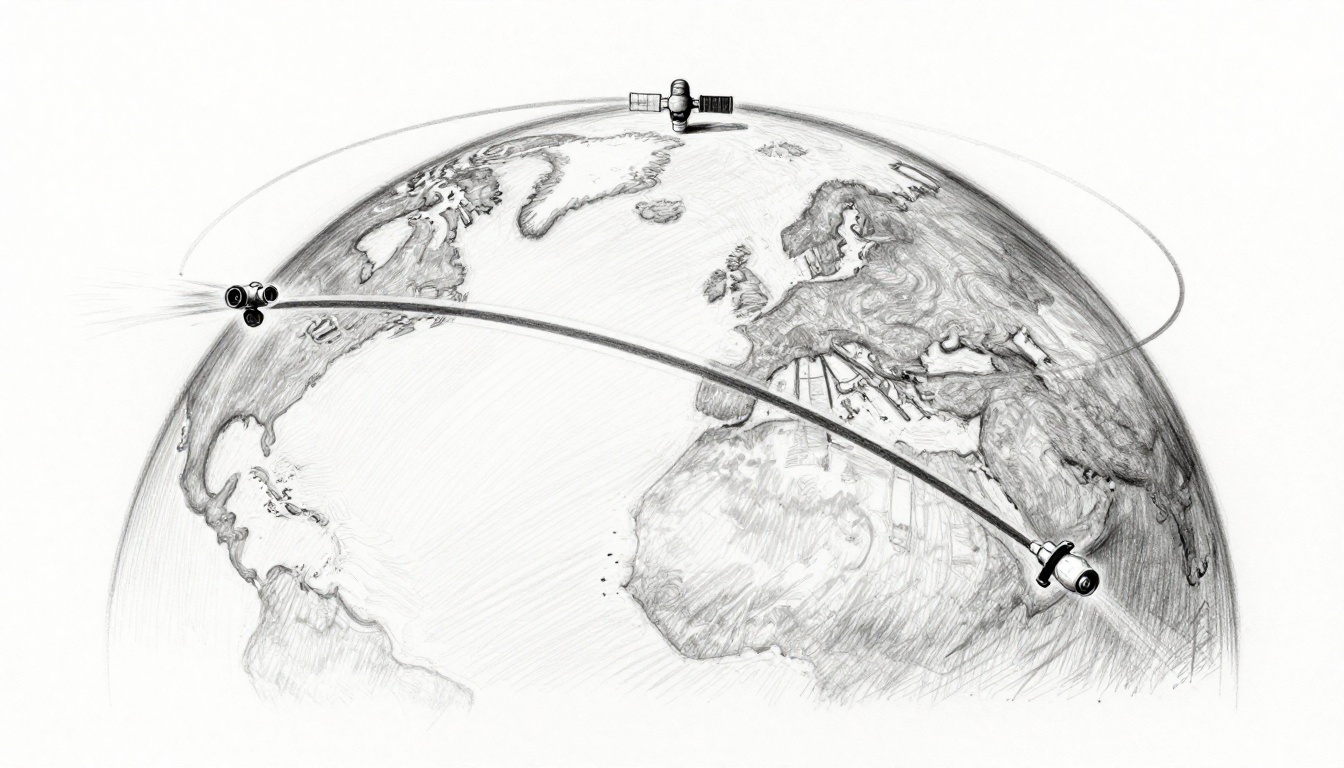
Look up on a clear night and you might spot it, a few bright lights zipping across the sky. Other times, you might see a steady “star” that barely seems to move. So why do some satellites show motion while others look almost frozen?
The answer is mostly about orbit height and how each satellite’s speed lines up with Earth’s rotation. In plain terms, satellites don’t choose where they go. Gravity and momentum set the rules.
Once you know the main orbit types, you can predict what you’ll see. You’ll learn why low Earth orbit satellites often streak, why medium Earth orbit glides more slowly, and how geostationary satellites can appear locked in one spot. Then you’ll be able to spot them next time you stargaze, even without fancy gear.
What Makes Satellites Move Fast or Stay Perfectly Still?
Think about a merry-go-round. The closer you stand to the center, the slower your feet move. If you stand farther out, your motion speeds up. Satellites follow a similar idea, even though they’re not on a ride.
Here’s the core physics in everyday words: gravity pulls harder when you’re closer to Earth. To keep falling but not crash, a satellite must move fast enough. That “just right” speed depends on its orbit height.
Kepler’s third law gives the relationship in a simple way: higher orbits take longer to complete one full trip around Earth. So orbital speed goes down as orbit height goes up. As a result, satellites at low altitudes zip across the sky quickly. Higher satellites move more slowly from your viewpoint.
That’s why your eyes see two totally different behaviors. Low ones look like streaks. High ones look like slow dots.
You can also think in terms of “time to lap Earth.” A satellite in a low orbit might circle Earth in around 90 minutes. Meanwhile, a geostationary satellite takes 24 hours. That timing matters a lot for what “stationary” really means.
The three orbit types that explain most sightings
Most skywatching comes down to three big groups: LEO, MEO, and GEO. Their altitude and period drive how much they appear to move.
| Orbit type | Typical altitude | Time per orbit | What you likely notice |
|---|---|---|---|
| LEO (low Earth orbit) | ~160 to 2,000 km | ~90 to 120 min | Fast streaks or bright trains |
| MEO (medium Earth orbit) | ~2,000 to 35,786 km | Hours (often ~12 hr) | Slower crosses, longer passes |
| GEO (geostationary orbit) | ~35,786 km | 24 hours | “Fixed” point near one longitude |
So, the next time you see a satellite move, it’s not random. It’s doing its job in its planned orbit.
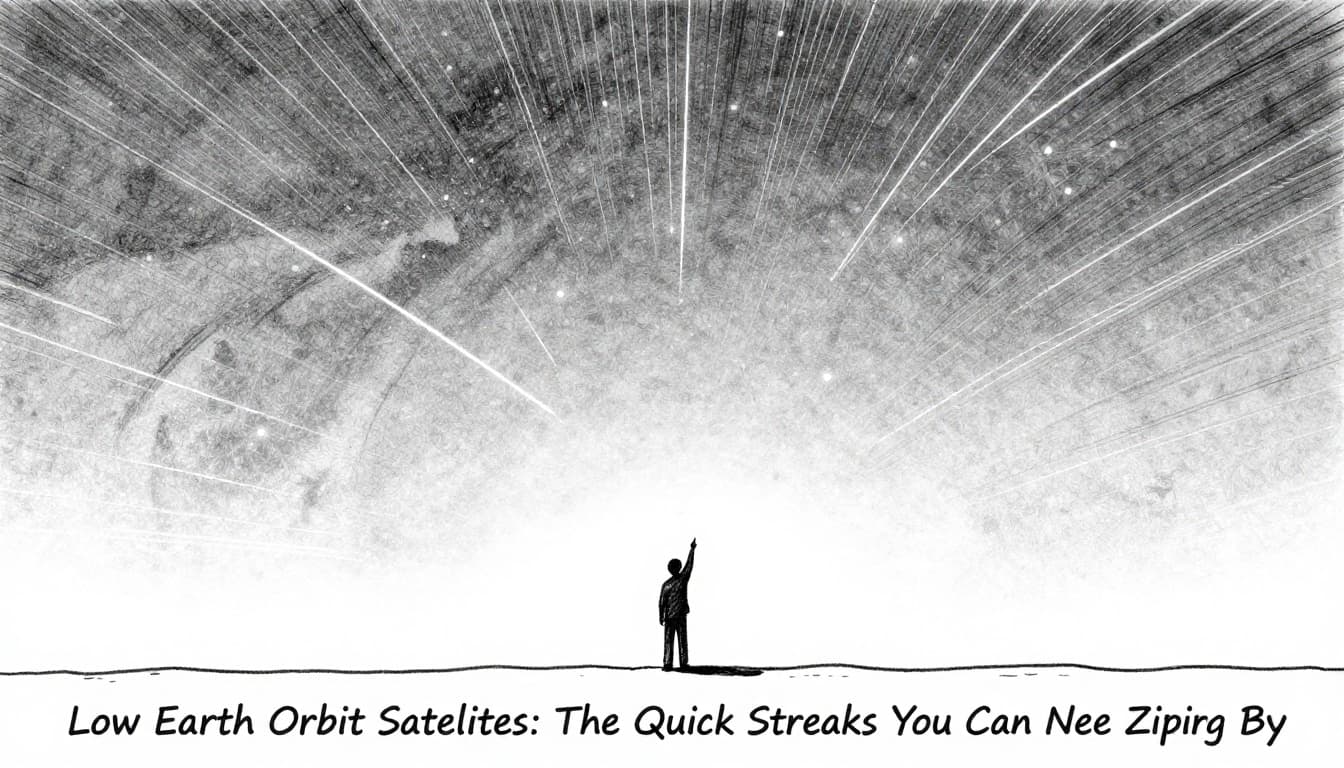
Low Earth Orbit Satellites: The Quick Streaks You Can See Zipping By
Satellites in low Earth orbit (LEO) usually sit roughly 160 to 2,000 km above Earth. Because they’re closer, they move much faster. Many LEO craft travel around 28,000 km/h. That speed turns a pass across your sky into a short event.
Most LEO satellites cross your view in about 5 to 10 minutes. Sometimes you catch them as a bright dot that slides steadily. Other times, a whole group lines up and you see multiple dots moving together.
If you’re trying to spot them from the ground, the timing helps. LEO satellites often show best right after sunset or before sunrise. That’s because the sky stays dark while the satellites still reflect strong sunlight.
One reason LEO looks so dramatic is simple: the satellites are closer. Even if they’re small, they can reflect enough light to stand out. Also, they don’t “wait” for you. They keep moving every minute.
Starlink and the reason LEO looks crowded in 2026
In March 2026, Starlink alone has thousands of satellites working in LEO. As of March 20, 2026, SpaceX had launched 11,583 Starlink satellites total, with 10,074 in orbit and 10,064 operational. Since launches keep happening, it’s common to see multiple passes in the same week.
When many satellites share similar orbital paths, your eyes pick up a “train” effect. The group may spread out later, but the initial dense launch orbits can produce those straight, bright streaks people post online.
If you want practical help, this guide on when and where to look for Starlink can make planning easier: How to See Starlink Satellites Tonight.
Why Starlink and Similar Satellites Light Up the Night Sky
Starlink is the most famous LEO constellation, so it’s the one people notice first. However, the “why” comes from how constellations work.
A single satellite gives you one pass. A constellation gives you many chances. Starlink uses multiple orbital shells, so satellites keep rising and setting relative to your location. That means you might see a pass one night, then another the next.
During the early days after launch, satellites can appear close together. As they finish raising and spreading into their final orbits, the group effect fades. Still, individual satellites remain visible as fast-moving points for many months, especially when the angle is right.
By March 2026, Starlink had a huge presence in orbit. More satellites also means more “targets” for your sky view. In other words, the sky doesn’t just look busy by accident. It’s busy because there are more satellites there doing their work.
A quick note about brightness: LEO satellites can look like they “flare” at times. That’s not magic. It’s sunlight bouncing off their surfaces as they move. Your viewing angle changes during the pass, so brightness can swing up and down.
If you want a simple way to check visibility, try this fan-run tracker: Starlink Satellites Tracker – Check when you can see it!. Many people also use apps on phones, which can show predicted pass timing based on your location.
The “straight line” look usually comes from perspective, because satellites move fast and your sky window is small.
Meanwhile, older, lone satellites often go unnoticed because they’re less frequent. In 2026, constellations make sightings more common, not because the satellites change, but because the numbers do.
Medium Earth Orbit: Satellites That Cruise at a Steady Pace
Medium Earth orbit, or MEO, covers a wide band. Most MEO satellites fly around 2,000 to 35,786 km high. Their orbital periods tend to be measured in hours. As a result, they appear to move more slowly than LEO satellites.
From your viewpoint, a MEO satellite might take 20 to 30 minutes to cross the sky, depending on where it passes. You’ll still see motion, but it’s calmer. Instead of a short streak, it can look like a steady glide.
The “middle lane driver” analogy fits here. LEO is like a fast driver passing your window in seconds. GEO is like a parked car. MEO is the driver cruising past at a speed you can actually track.
MEO also helps balance coverage and delay for systems that need global reach. That’s why navigation satellites often sit in MEO. The setup supports frequent coverage without needing the extreme height of GEO.
Examples that show up in your daily life
Navigation systems use MEO because they work well for global positioning. You’ll hear about GPS, but other networks use similar ideas, like Galileo, GLONASS, and BeiDou.
For skywatchers, MEO satellites often look like slower-moving lights that don’t hang in place. They might be faint, but the motion is usually easier to follow than a LEO streak.
GPS Satellites and How They Help Us Every Day
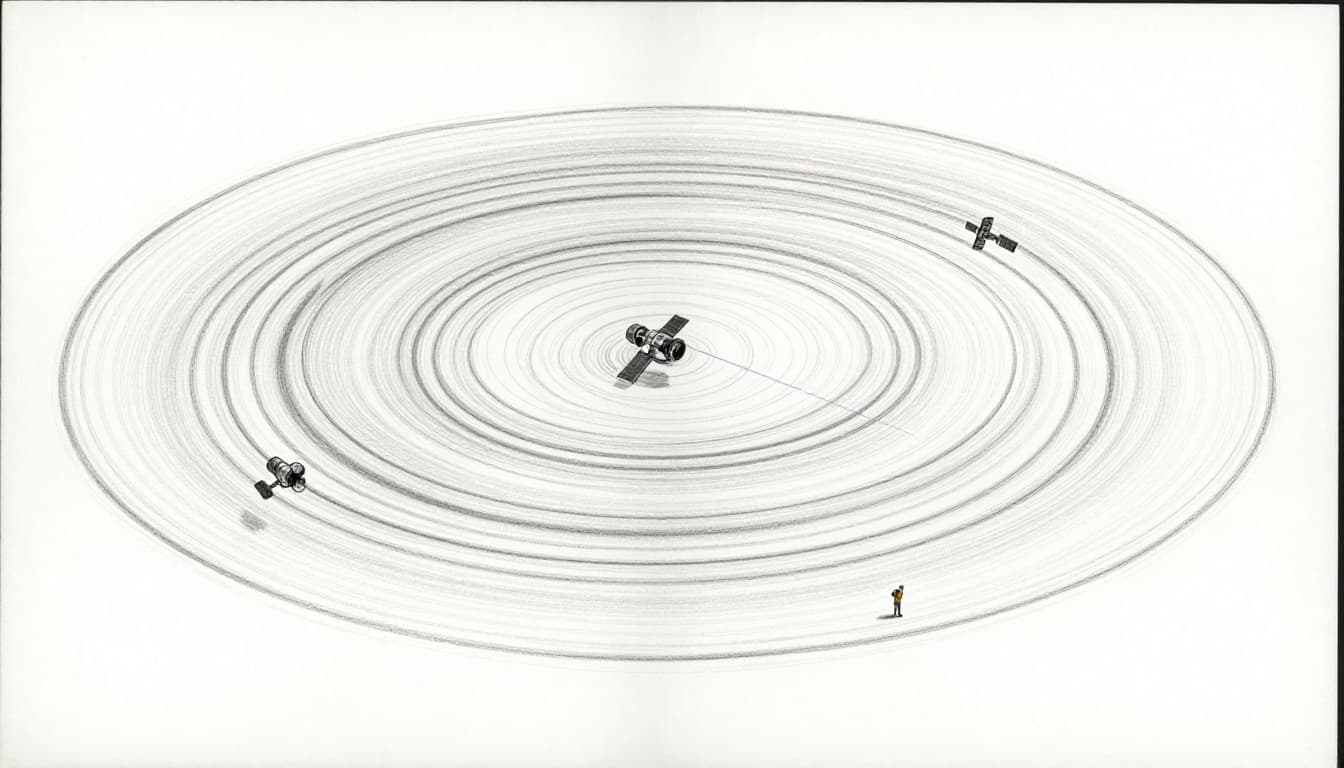
GPS satellites live in MEO at about 20,200 km altitude. They circle Earth in roughly 12 hours. That timing is part of the reason GPS coverage stays dependable.
As of late March 2026, the GPS constellation had 32 satellites in orbit. That matters because GPS needs multiple signals at once. More satellites than the bare minimum helps ensure you can get a fix even when one signal is blocked.
In simple terms, your phone or car receiver listens for timing signals from several satellites. Then it calculates your position based on the travel time. That’s why GPS works even when you can’t see landmarks.
From the ground, GPS satellites don’t usually look bright like LEO trains. Still, during a good pass, you may spot a dim dot that moves steadily.
There’s also a practical reason GPS satellites are in MEO: it provides a good mix of coverage and signal strength. Compared to GEO, MEO generally gives better timing for certain uses. Compared to LEO, it gives a broader footprint per satellite.
If you want an official overview of the space segment, see GPS.gov: Space Segment. It breaks down how the system is built and how the satellites fit into the bigger network.
So when you see a slow-moving point, you’re often watching a part of the system that helps you find your way every day.
Geostationary Orbit: The Magic of Satellites That Never Budge
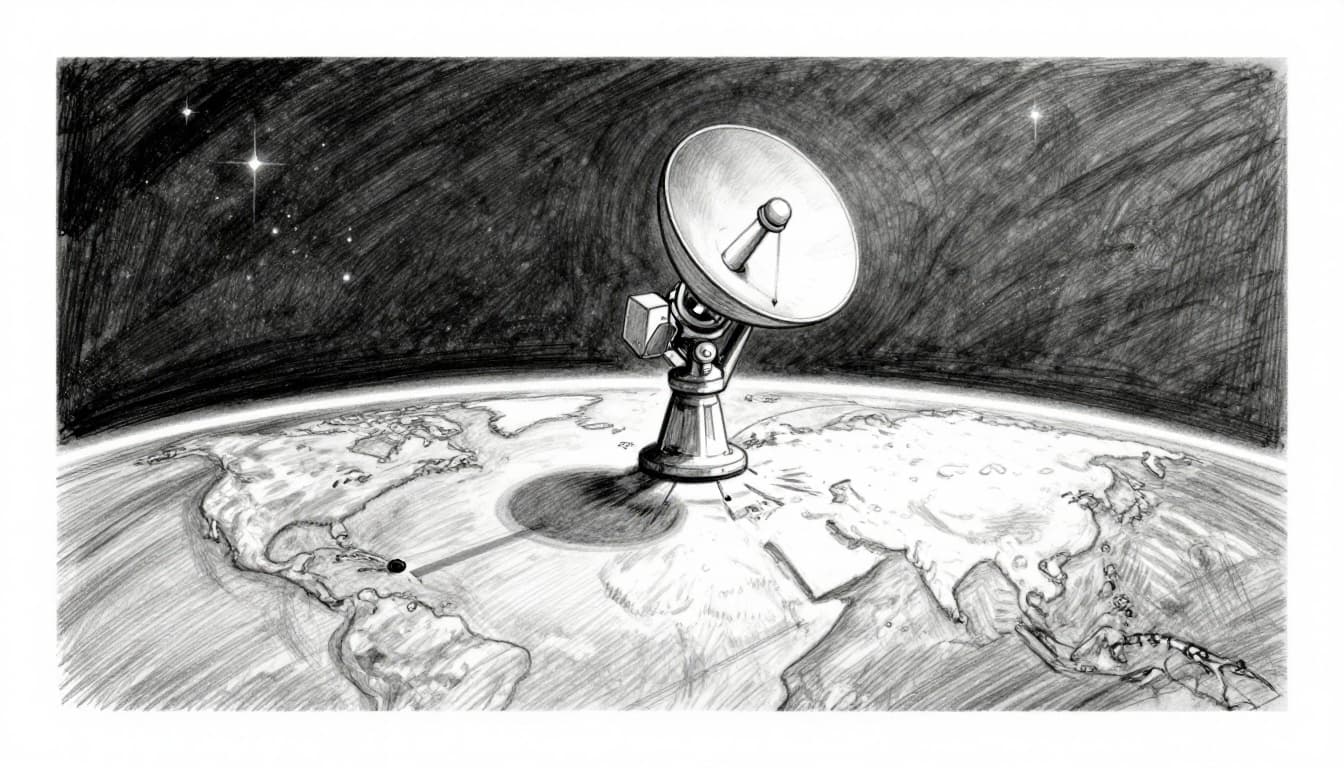
Now for the “how is that even possible?” orbit. Geostationary orbit (GEO) sits at about 35,786 km. Satellites there match Earth’s rotation.
Earth spins once every 24 hours. A geostationary satellite takes the same time to orbit once. Because both periods match, the satellite appears to stay over the same spot on Earth (from your viewpoint).
That’s the big reason GEO satellites look stationary. Their position relative to the ground doesn’t shift much as Earth turns beneath them.
However, “stationary” depends on your location. People near the equator see GEO satellites higher in the sky. As you move toward higher latitudes, GEO satellites look lower and can become hard to spot. In the far north or south, you may not see them at all.
What you often notice: weather, TV, and telecom
In the US, many GEO satellites are linked to services you already use. Weather coverage is a great example. The US operates geostationary weather satellites, including:
- GOES-19 (GOES East): launched in 2024, fully operational in 2025, and monitoring much of the Western Hemisphere
- GOES-18 (GOES West): monitoring the western US and nearby ocean regions
For a clear look at geostationary satellites in NOAA’s system, check Geostationary Satellites | NESDIS. It explains how these satellites keep a fixed view over their assigned region.
Everyday Examples of GEO Satellites Watching Over Us
When you watch storm maps on TV, you’re often looking at data from GEO satellites. Those satellites provide continuous monitoring because they stay fixed over a region.
One satellite can cover a large portion of Earth. That’s why only a few are needed for “always watching” coverage. In contrast, LEO needs many satellites to cover the planet well.
You might also hear about GEO telecom and broadcasting satellites. These support stable coverage for long-term services, because the ground antennas can point at nearly the same location.
Still, GEO satellites can be faint. From many US viewing spots, they may look like steady points. That’s also why they can blend into the background of real stars, especially if you’re not watching the sky for movement.
If a “star” doesn’t move at all over several minutes, it might be a geostationary satellite (or just a star). Timing apps help confirm.
In practice, amateur observers often identify GEO objects by first tracking LEO passes, then checking which other satellites are predicted to be up.
Why These Orbits Matter and How to Spot Satellites Now
Once you connect the dots between orbit height and motion, satellite spotting gets easier. You stop guessing and start predicting.
- LEO means short, bright passes and frequent “trains,” often right after sunset.
- MEO means slower crossing lights that can take longer to move through your view.
- GEO means a steady point near one direction, depending on your latitude.
Also, 2026 has more satellites in the sky than most people expected. Starlink’s growth alone pushed LEO toward “common to notice.” As of March 20, 2026, there were over 10,000 Starlink satellites operational in orbit. That translates into more chances for you to catch a moving light.
If you want a simple way to plan tonight, try a tracker like Starlink Tracker — Live Satellite Positions | Orbital Radar. You can enter your location and see upcoming passes.
Then do the sky version of a few basics:
- Get away from bright city lights if you can.
- Face west after sunset for many LEO passes.
- Look for a steady dot that turns into a streak, or a chain of dots.
Bring binoculars if you have them. Also, give each sighting a few minutes. LEO will usually move noticeably in that time. GEO should feel almost fixed.
And here’s a fun mental image for your next look up: Earth is like a spinning turntable, and satellites are like different riders on a track. Some riders zip by fast. One rider keeps the same seat because the timing matches the turn.
Conclusion
Some satellites move because they’re close enough to Earth to whip around quickly. Others look stationary because they match Earth’s 24-hour spin. That’s why orbit height controls your whole viewing experience.
If you caught a fast streak tonight, you were likely seeing LEO. If you saw a slower light, MEO may be the match. If a point barely shifts, GEO could be doing its steady work.
Next time you step outside, try tracking one pass. Grab binoculars, open a tracker app, and watch the sky do its quiet math. If you spot something cool, share the time and direction you saw it in the comments.