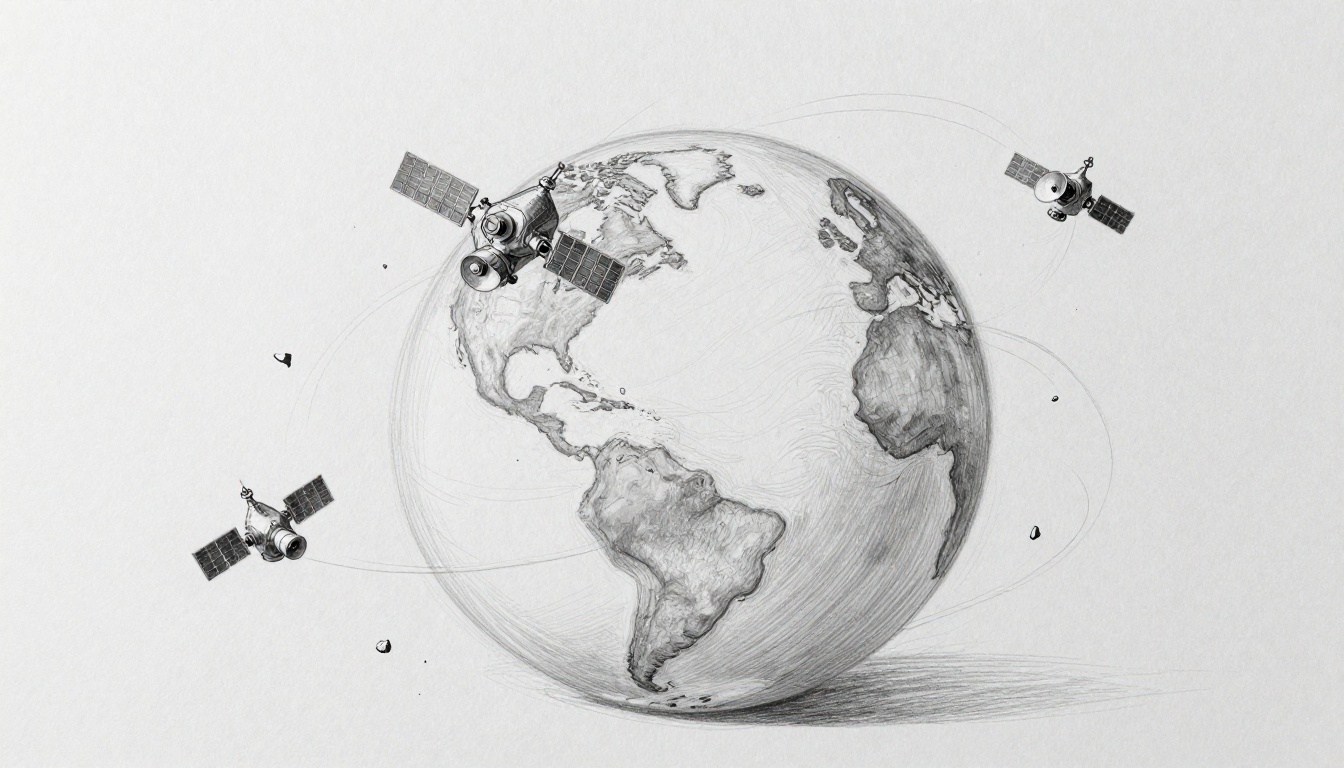
The next time your car navigation updates smoothly, or your phone loads a map in seconds, remember this. Satellites make that happen. But the same space around Earth now has a hidden problem: space debris and signal interference.
As of March 2026, there are tens of thousands of tracked objects larger than 10 cm (over 33,000 in the way many summaries count), plus about 1.2 million smaller pieces that are harder to track. Meanwhile, the satellite boom keeps growing. By early 2026, active satellite counts sit in the low teens, with Starlink-like mega-constellations taking a big share.
This matters for a simple reason. Debris can hit satellites like bullets. Interference can block or trick the radio links that satellites depend on.
So how do these risks show up in real operations? You’ll see it in the types of damage debris causes, why collisions can snowball in low-Earth orbit, and how jamming or spoofing can break navigation and communications. We’ll also look at what it means for daily life, including GPS disruption and satellite outages during tense moments on Earth.
Let’s start with the most visible threat: what debris does when it strikes.
What Space Debris Does to Satellites on Impact
Space debris is more than “old junk in space.” It includes spent rocket stages, dead satellites, leftover fragments, and tiny shards produced by breakups. Most of this material orbits Earth at thousands of miles per hour. When two objects meet, the speed adds up fast, often near 18,000 mph.
Think of it like this: a satellite can be “fine” until it suddenly isn’t. A small fleck can still carry enough energy to damage hardware. That’s why debris risk covers everything from outer panels to sensitive optics.
Here are the main ways impact damage shows up:
1) Pitted surfaces and degraded solar power
Small particles can “sandblast” areas like solar panel face sheets. Over time, that reduces power output. For a satellite, less power can mean less range for operations and a shorter time to stay in a safe attitude.
2) Punched holes, broken structures, and electrical problems
Smaller fragments can punch through components or wiring insulation. As a result, you can see cracked parts, short circuits, and failures in subsystems. Even if the satellite still turns on, the mission may fail.
3) Catastrophic breakup from larger chunks
Bigger debris acts like a wrecking ball. A single hit can tear apart the satellite body, destroy the antenna system, or shred thrusters. When that happens, the satellite becomes debris too.
The numbers help explain why this keeps getting worse. Early 2026 tracking counts over 48,000 objects larger than 10 cm. That’s the visible part of the problem. Below 10 cm, pieces become far more common, and those smaller fragments can still cut into solar arrays and optics.
History shows what these impacts can look like. In 2007, a Chinese anti-satellite test created thousands of fragments in low-Earth orbit. Then in 2009, the Iridium-Cosmos collision demonstrated how one event can turn into long-lived risk for other missions. After those moments, operators had more close calls and more urgent avoidance planning.
One key point often gets missed: debris isn’t just a “collision event” problem. It also becomes a maintenance and replacement problem. A satellite that takes a hit might still run, but it often runs with reduced margins. That can force earlier retirement, earlier reboots, or more frequent station-keeping burns.
The Chain Reaction Risk from Collisions
In low-Earth orbit, space can feel roomy, but it’s not. Between about 775 km and 1000 km altitude, many active systems fly in overlapping bands. That density is why collision risk isn’t only about today. It’s about what collisions do to tomorrow.
A famous idea called Kessler syndrome describes a chain reaction. One collision creates fragments. Those fragments then collide with other objects. The debris belt grows denser over time, which increases the odds of more collisions. Eventually, certain orbital paths could become unusable for years, even decades.
Close approaches already happen constantly. As of early 2026, conjunctions within about 1 km occur around every 22 seconds overall, and about every 11 minutes within Starlink’s tracked population. That means operators can’t wait for a “perfect” orbit. They need constant risk checks and sudden maneuvers.
Avoidance maneuvers cost money and fuel. They also take time and planning, and they can stress spacecraft systems. As mega-constellations grow, the number of objects increases, and so does the number of moments where an operator must decide whether to move.
Here’s where the outlook gets serious. Projection tools and “crash clock” models show that without strong avoidance and debris control, the chance of a major cascade rises in the 2030s. IEEE Spectrum has tracked this risk with a CRASH Clock lens in its coverage of overcrowding and collision timelines: CRASH Clock Measures Dangerous Overcrowding in Low Earth Orbit.
Meanwhile, some planning signals also show why the situation is tense. For example, Starlink operations rely on frequent collision-avoidance adjustments, and systems keep shifting altitudes. In 2026, SpaceX planned moving thousands of satellites to lower altitudes to reduce future collision chances. That kind of action helps, but it also shows the baseline risk is already high.
The hard part isn’t one collision. It’s what one collision can start.
So ask a simple “what if” question. What if a major impact happens during a busy period, when other satellites can’t dodge in time? In a chain reaction scenario, debris could spread across orbital shells, raising risk for many missions at once. That’s why this isn’t just a space industry issue. It’s a scheduling, navigation, and communications issue for everyone who depends on satellites.
How Jamming and Spoofing Signals Cripple Satellites
Debris can smash hardware. Interference can cripple a satellite’s work even if the satellite survives the physical environment.
Satellites send signals across space, but those signals are weak by the time they reach Earth. A satellite receiver also needs the signal to be clean. That’s where jamming and spoofing enter.
Jamming is like turning on a loud siren in the receiver’s ears. A jammer blasts radio energy that overwhelms the wanted satellite signal. Some devices on the gray market can create enough noise to disrupt consumer GPS receivers, even if they were built for short-range use.
Spoofing is sneakier. Instead of blasting noise, spoofing sends fake signals that look real enough to trick receivers. The receiver “locks on” and calculates the wrong position or timing.
Both issues can show up in ways you’ll recognize. If GPS stops working on your phone or car dash, the device may drift, stall, or fall back to slow map updates. If a maritime or aviation system loses clean timing, safety margins can shrink fast. And when satellite links for internet get blocked, “just wait” stops being an option.
Another layer comes from electromagnetic noise on Earth. Solar activity can change how signals behave. In addition, other RF users can create interference if equipment isn’t well filtered.
So what kinds of disruptions can you expect?
Navigation failures
If location timing goes wrong, planes, ships, and vehicle fleets lose a trusted reference. That can lead to detours, delays, or degraded guidance.
Communications blackouts
For satellite internet, a jammed link means data stops flowing. The user experience looks like lag, outages, or sudden reconnect loops.
Operational confusion
Even when a system doesn’t fully fail, it can make the wrong call. That’s a bigger risk than a simple “no signal” moment.
Real-World Jamming Attacks in Recent Conflicts
Jamming tends to spike where conflict increases electronic warfare. In 2026 reporting on the Iran war, CNN described how GPS jamming changed tracking and positioning for ships and aircraft in the region, creating clusters of falsely placed targets near sensitive sites: GPS jamming and its use in the Iran war, explained.
Even when the intent targets military systems, the spillover can hit civilian services. A jammer doesn’t know the difference between a commercial vessel and a patrol aircraft. It just knows that the receiver uses that band and needs that signal to lock in.
In addition, jamming effects can vary by device and location. A phone receiver on a street corner might struggle differently than an aviation receiver with better antennas. Still, the pattern remains: jamming reduces reliability when you need it most.
When jamming hits, “loss of GPS” can mean far more than wrong turns.
One reason jamming keeps growing is that it’s often easier than people expect. Radio transmitters are simple compared to building and launching satellites. That imbalance puts pressure on receiver design, signal processing, and multi-system backup. Some receivers support multiple frequencies or multiple navigation sources, which can help. Still, as interference tools improve, protection remains an ongoing race.
Spoofing Tricks and Why They’re Sneakier Than Jams
Spoofing doesn’t just block signals. It can replace truth with a convincing lie.
In GPS spoofing, an attacker transmits fake timing and code patterns so the receiver thinks it’s in a real location. As a result, a ship could “report” it’s near port while it’s actually off course. A drone could follow a wrong route without obvious warning.
Spoofing can be hard to detect because the receiver may treat the fake signal as normal. In contrast, jamming often causes clear loss of lock. Spoofing can keep the system “working,” just incorrectly.
There are documented cases where GPS spoofing affected how space-based services looked to users and systems in conflict zones. For example, reporting tied Iran interference to GPS spoofing tactics that were used to disrupt Starlink service in that context, as summarized in: Iran nailed Starlink by spoofing GPS.
Another reason spoofing matters is that timing drives a lot of systems. Even when you think you only use GPS for “where am I,” timing also affects networking, synchronization, and some forms of industrial control.
Meanwhile, anti-spoofing efforts keep moving. The U.S. Navigation Satellite System 3 (and related modernization work) aims to improve signal resilience and help receivers detect tampering. Even so, spoofing is a low-cost tool compared to the expense of rebuilding trust in navigation data.
If jamming is a thrown brick, spoofing is a costume. It looks like the real thing until you check.
Everyday Impacts and What It Means for Our Connected World
Space risk might sound far away, but satellites touch daily life constantly. When navigation fails, delivery routes shift. When timing breaks, financial systems and logistics plans lose a stable reference. In a crisis, that can turn a slow problem into a fast one.
On the ground, you feel it first as degraded convenience. Maps lag. ETA updates stall. Vehicle tracking stops making sense. In other words, you don’t just lose a map pin. You lose coordination.
In disasters, satellite links often become extra important. If cell networks get overloaded, people lean on satellite messaging, emergency beacons, and backup internet. Interference can disrupt those links, and debris risk can threaten the satellites that carry them.
In the military sphere, the stakes go higher. Jammed drones and confused targeting do not just “interrupt a mission.” They change decisions. Commanders rely on accurate timing and reliable comms. So if GPS or link signals get messed with, the tempo of operations shifts.
Then there’s the long-term risk. Mega-constellations raise the number of objects in orbit. That can mean more close approaches and more need for avoidance maneuvers. Even if a satellite survives, the operating plan might become harder to maintain.
At the same time, there are signs of real concern in policy circles. The Conversation, for example, framed the issue as orbital crowding with a possible future “catastrophe” if growth and debris controls don’t improve: Too many satellites? Earth’s orbit is on track for a catastrophe.
Mitigations exist, and they matter. Better tracking helps operators plan. Conjunction screening reduces surprise. Rules for debris mitigation (like end-of-life disposal) reduce the number of new targets. Upgrades in receiver design help resist interference.
Still, none of these steps remove the core truth. Space is fragile. One hit can spread harm across an orbital path.
Conclusion: Two Threats, One Dependence
Space debris and signal interference hit satellites in different ways, but they share one root problem. We depend on space hardware and space radio links every day.
Debris can physically damage satellites like fast shrapnel. Interference can block or fool the signals that satellites use. Together, they threaten communications, navigation, and the mission reliability behind everything from GPS on your commute to emergency connectivity.
And the scale is already clear. There are over 48,000 tracked objects larger than 10 cm plus about 1.2 million smaller pieces. Close approaches happen constantly, and crowded orbits create collision chain risk.
If you want one action that matters, it’s this: support sensible debris cleanup and interference-resilient navigation policies in the places where rules get written. What happens in orbit doesn’t stay in orbit. It shows up on your dashboard, your shipping app, and your phone when you need it most.