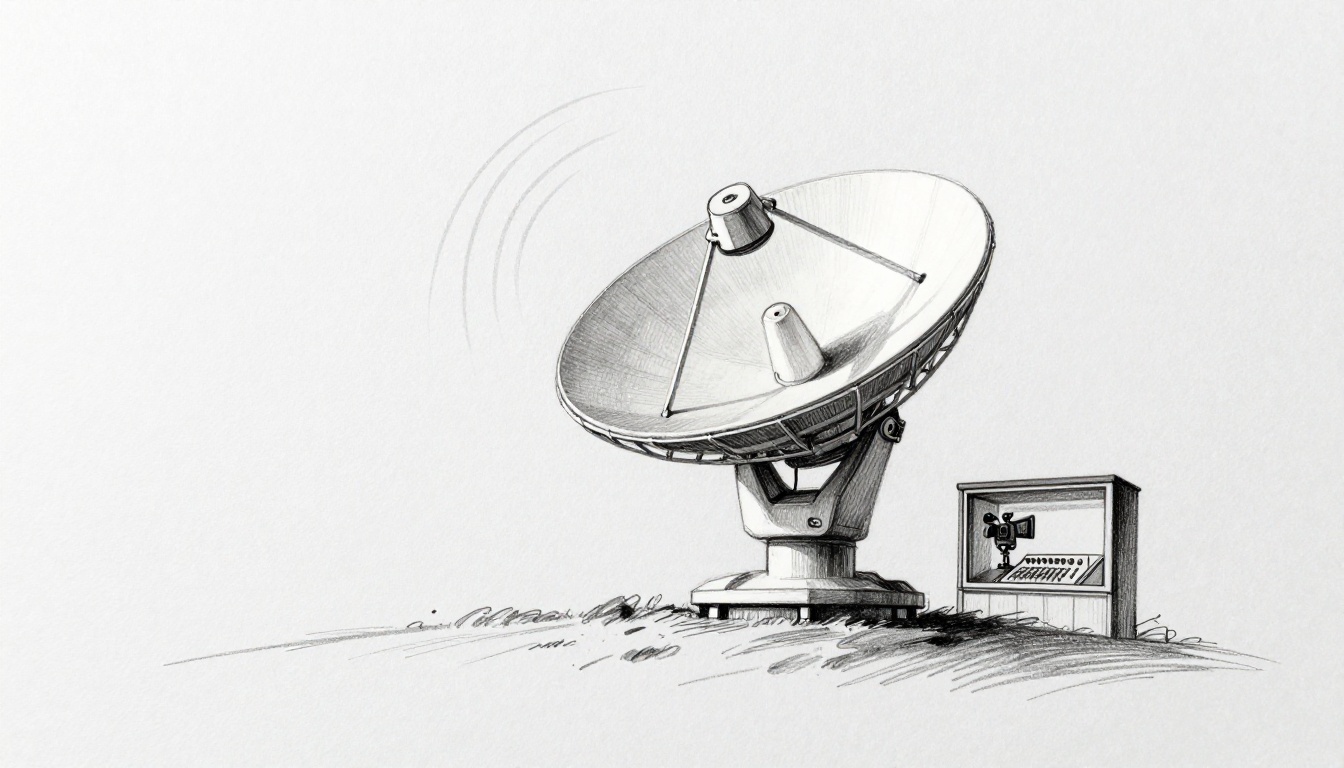
The first live TV beamed across the Atlantic via satellite happened in 1962, using Telstar to send pictures between the U.S. and Europe. It sounded like science fiction, but it was a simple idea: send a TV signal up to space, then send it back down where people can watch.
That is the core of satellite communication in television broadcasting. Broadcasters push video and audio signals from a studio to a satellite. Then the satellite relays them to homes, towers, or cable headends. As a result, you can get TV even in remote areas where cable lines don’t reach.
Ever wonder why your satellite TV keeps working out in the countryside? It’s because the signal path does not rely on local wires. Instead, it uses the same “space hop” for huge distances.
In this guide, you’ll see how a TV signal travels via satellite step by step. You’ll also learn the main real-world uses, which providers run the service, and what challenges still show up. Finally, you’ll get a look at where satellite TV is going in 2026.
Before we get technical, here’s the quick history note: Telstar’s first live transmission is documented by the BBC in detail through its July 1962 coverage (see Telstar 1 first live broadcast from the BBC). Now let’s follow the signal journey.
Step-by-Step: How a TV Signal Travels Via Satellite
Think of a satellite like a space mirror. It doesn’t create TV by itself. Instead, it reflects and reshapes the incoming radio signal so millions of viewers can receive it.
The journey in four steps
Here’s the path from studio to your screen, in plain terms:
- Studio compresses and protects the show
- Broadcast centers encode video and audio, often using MPEG-style compression.
- Then they add encryption so the signal can’t be easily stolen.
- Uplink sends the signal to space
- A large ground dish points at the satellite.
- Broadcasters transmit using satellite uplink frequencies (often in the 14 GHz area for Ku-band systems).
- Transponder receives, amplifies, shifts, and rebroadcasts
- The satellite’s transponder acts like a high-power repeater.
- It listens on one frequency band, then sends back on another.
- For example, Ku-band downlink often lands in the 10.7 to 12.7 GHz region.
- Downlink lands at your dish, then your box decodes it
- Your home dish captures the downlink signal.
- The LNB (low-noise block downconverter) shifts it down so your set-top box can decode it.
- The box decrypts, then outputs the video to your TV.
A big reason “live” via satellite can feel slightly delayed is distance. GEO satellites sit about 36,000 km above Earth. For live events, that often leads to around 1 to 2 seconds of delay, depending on processing.
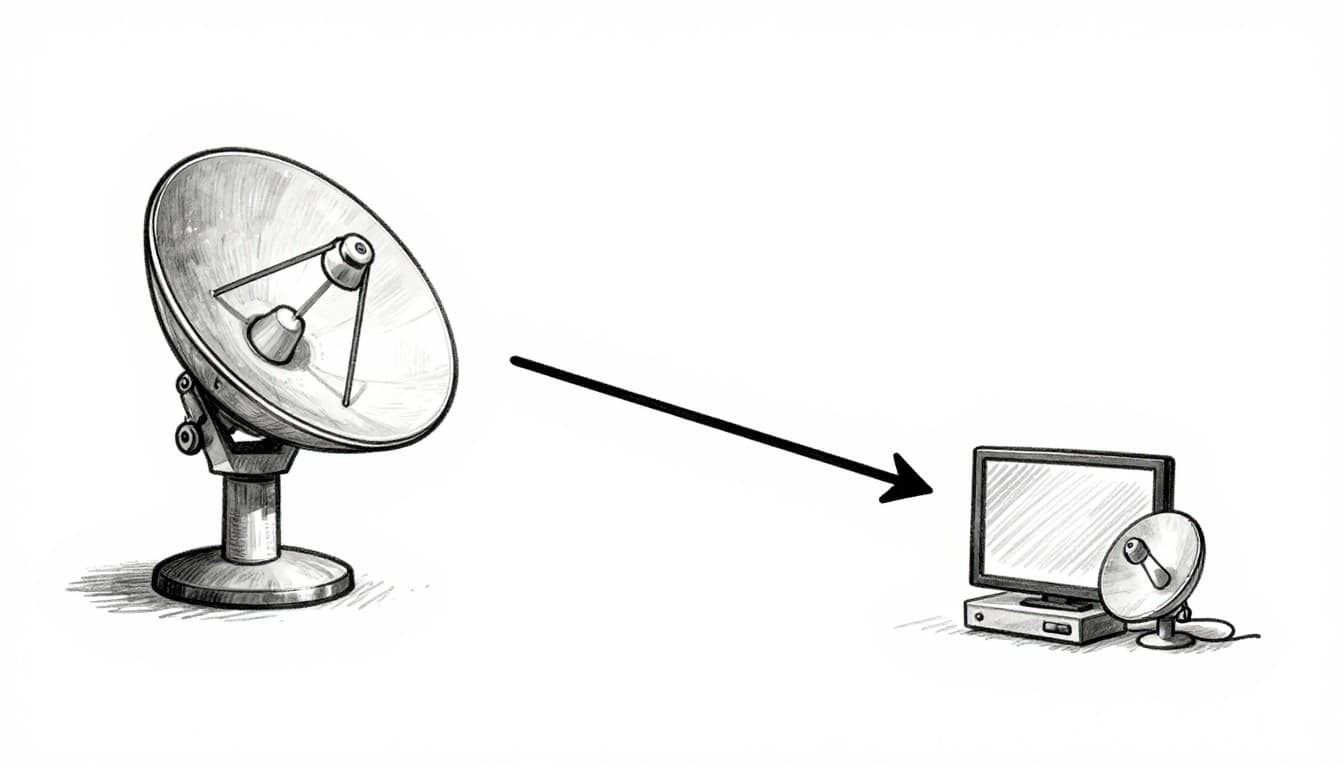
If you want a crisp refresher on the idea of uplinks and downlinks, TechTarget lays it out in simple terms (see uplink and downlink basics from TechTarget). You can also see another clear breakdown in satellite uplink and downlink explained by Bright Ascension.
From Studio Uplink to Orbit
Before anything goes up, the broadcast center prepares multiple feeds. Live cameras, sports feeds, and remote interviews get gathered into one broadcast stream. Then compression helps fit more channels onto limited satellite capacity.
After that, engineers encrypt the transport stream. That matters because satellite signals can be received over wide areas. Encryption reduces theft and stops random receivers from decoding premium content.
Finally, the uplink station handles power control, timing, and pointing accuracy. A small alignment mistake can weaken the signal and reduce picture quality.
Satellite Magic in the Sky
The satellite does the heavy lifting through its transponders. A transponder receives a signal on one frequency. Then it amplifies it and shifts it to a downlink frequency. In other words, it re-broadcasts your TV content back toward Earth.
One satellite can support hundreds of channels, often around 300 to 400, depending on compression quality and transponder capacity. Also, different bands work better for different dish sizes.
- Ku-band: common for smaller home dishes
- C-band: often used for larger receiving systems and can be more weather-tolerant
Downlink Straight to Your Dish
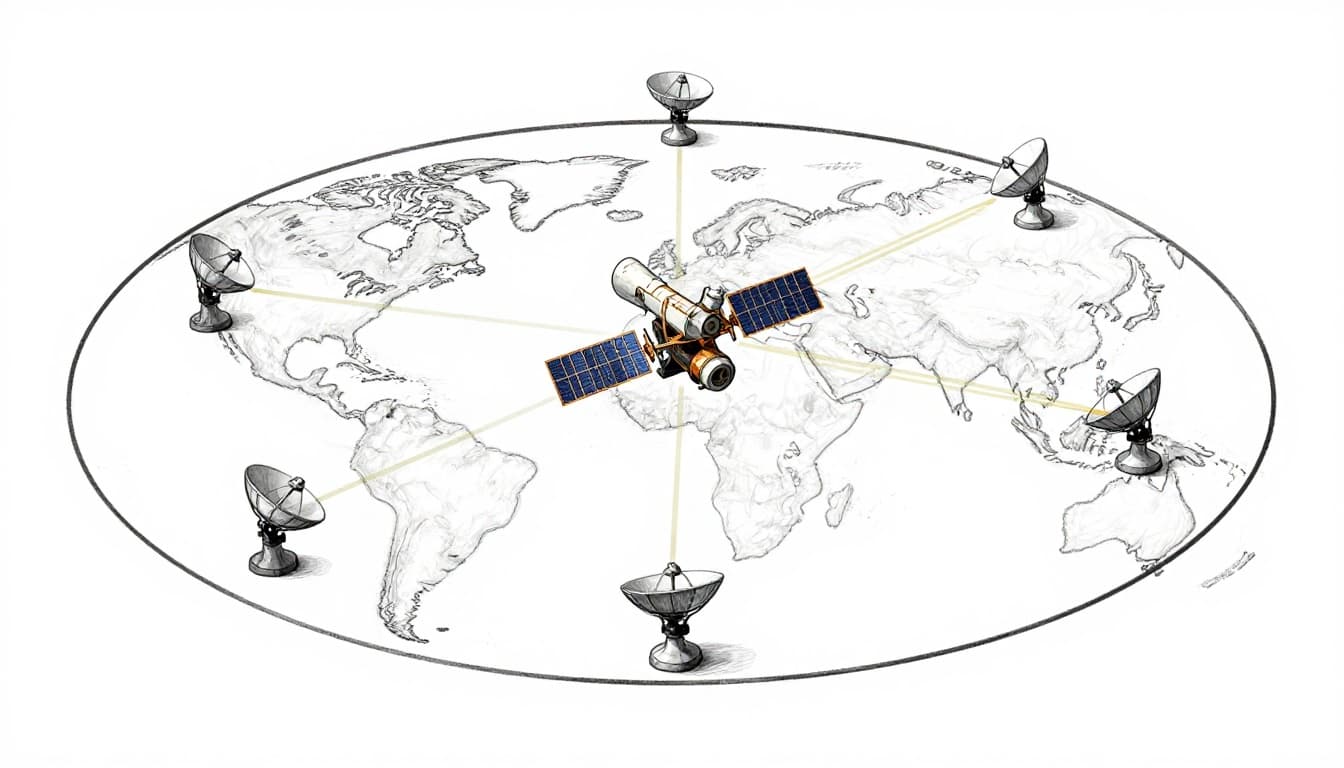
At your home, the dish must “see” the right part of the sky. That alignment step is why installers spend time leveling and aiming. Once the signal is locked, the LNB converts high-frequency satellite signals into a range your receiver can handle.
Then the set-top box takes over. It decrypts the stream and decodes it into video and audio. From there, you get crisp HD channels (and in many markets, more UHD options).
One more thing: if rain or heavy storms weaken the signal, satellite systems can fall back to error correction modes. Picture may pause, but service can still recover faster than some other delivery methods.
Real-World Ways Satellites Deliver TV Content
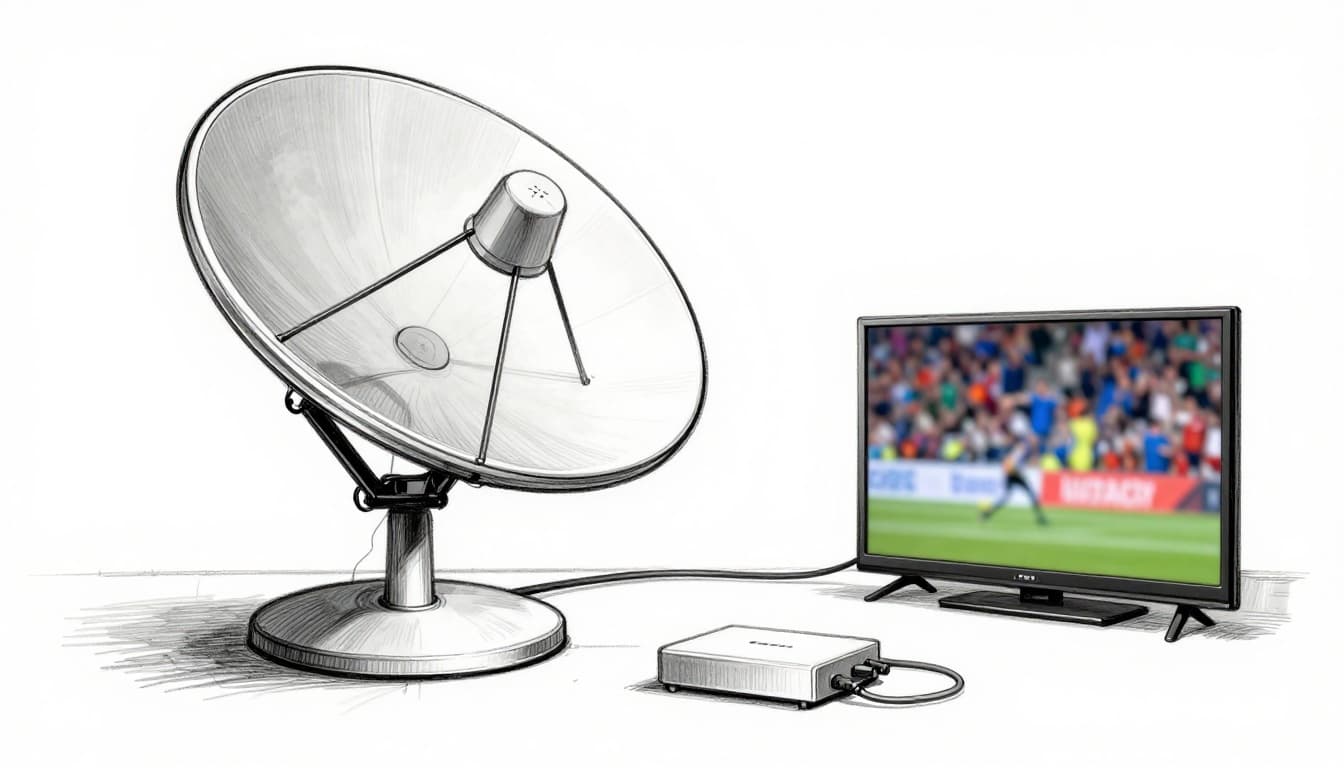
So where does satellite communication in television broadcasting actually show up in day-to-day life? It’s not one single use case. Instead, satellites support several big delivery paths.
Global channel volume is still massive. By 2026, satellite and related services offer roughly 53,600+ TV channels worldwide (source cited through current market tracking in recent reporting). That scale exists because satellites move many streams at once.
Here are the main real-world uses.
- Direct-to-Home (DTH): TV channels go straight to home satellite dishes.
- Live sports and breaking news: fast global reach for time-critical events.
- Feeding cable and local transmitters: send content to headends and regional towers.
Direct-to-Home Services for Everyday Viewing
In DTH setups, your dish receives the downlink signal directly. Your receiver handles decrypting, channel selection, and formatting for your TV.
This approach works well when local cable infrastructure is limited. It also supports wide channel lineups, including HD and growing UHD content. In the U.S., DTH is commonly associated with providers like DirecTV and DISH, where satellite delivery still complements app-based viewing options.
Powering Live Sports and Breaking News
Live events are where satellite TV often shines. Sports tournaments, major league games, and global news events happen on strict timelines. Broadcasters need reliable distribution that can reach many regions at once.
Satellites help because you don’t need to wait for local fiber routes. A feed can go from an event location to a broadcast control center, then out to satellite distribution. Even with small delays, viewers can still watch the action as it happens.
Feeding Cable Networks and Local Towers
Cable operators and regional broadcasters often rely on satellite feeds. The content arrives at cable headends or local distribution sites. Then it gets distributed through cable plant, digital systems, or other local transmission methods.
This helps when one region needs dozens of channels. Satellites efficiently deliver a large “bundle” of programming over huge distances.
Top Providers, Satellites, and Tech Powering 2026 Broadcasts
You’ll see a few major satellite operators behind the scenes. They manage fleets of satellites, transponders, and capacity for TV delivery.
In 2026, SES is a major name in this space, especially after its acquisition of Intelsat in 2025. SES media services handle around 9,500 channels in total and reach about 2 billion viewers, with ongoing deals for HD and UHD content.
Eutelsat is also a key operator, investing heavily in HD and 4K transponder capacity. Exact 2026 channel counts can vary by reporting source, but the trend is consistent: more capacity goes to higher-resolution formats.
For the U.S., most viewers know the service provider brands. DirecTV and DISH deliver the finished TV package to homes. The satellite operator provides the space-based transport, while the service provider packages channels and manages customer hardware and support.
If you’re comparing current satellite TV options, provider comparisons like DirecTV vs. DISH TV from Allconnect can help you understand differences in channel lineups, DVR features, and pricing structure.
Meanwhile, the “tech” side keeps improving. Compression helps pack more content per transponder. Encryption protects premium channels. And Ku-band remains common for home dishes because it supports smaller antennas.
Why Satellites Shine for TV (Plus Challenges and What’s Next)
Satellite delivery has strengths that streaming can’t always match. At the same time, it faces limits that broadcasters and operators keep working around.
First, satellite coverage is wide. Second, the “signal path” doesn’t depend on local cables. Third, satellites handle lots of channels at once, which helps pricing and packaging.
But the challenges are real too. Costs can be high, and weather can interfere.
Here’s a balanced look.
Advantages That Keep Satellites Essential
Satellites stay useful for several reasons:
- Huge coverage: reach rural regions and remote areas with fewer infrastructure gaps.
- Long-distance consistency: the signal moves over space, not over fragile local wiring.
- Multi-channel efficiency: transponders carry many channels in one go.
- Resilience planning: operators can reroute or adjust power with proper network design.
Overcoming Common Hurdles
The biggest technical problem viewers notice is rain fade. Heavy rain can weaken Ku-band signals. That can cause brief pixelation or service interruptions, especially in severe storms.
Cost is another hurdle. Building and launching satellites, plus maintaining ground equipment, takes serious funding. Also, piracy and stolen credentials are constant risks. That’s why encryption and receiver authentication matter.
Competition from streaming is also a pressure point. Many people switch apps and cancel traditional TV. However, satellite still offers live event viewing in a way many consumers trust.
Satellite TV is strongest when you need dependable live delivery, not when you want one-device-only convenience.
Hot Trends Shaping Satellite TV’s Future
In March 2026, one clear trend is that satellite providers are improving live delivery speed and picture quality. Industry reporting around SatShow 2026 highlights shifts like faster content handling and better combined satellite and media workflows (see satellite trends shaking up the industry in 2026 from Fierce Network).
Also, the market keeps moving toward higher resolution. More channels are HD today, and more capacity is being reserved for ultra-high-definition options.
Finally, satellite services are blending with app-style viewing. People want live sports on the big screen, plus the option to watch elsewhere. So, the “future” often looks like hybrid viewing, not pure satellite-only TV.
Conclusion
Satellite communication in television broadcasting changed what people could watch, and where they could watch it. The signal still follows the same core path, uplink to space, transponder relay, then downlink to your dish.
From DTH viewing to live sports distribution and feeds for local towers, satellites still solve a simple problem: they move TV content across long distances reliably. Even with streaming competition, the satellite approach keeps delivering for millions.
So next time you flip on live sports, think about the first Telstar-style idea in action. The satellites overhead are doing far more work than most viewers ever notice.
Share your satellite TV story below, or keep exploring how the tech behind live broadcasts keeps improving.